
 Leveling
Guides
Scurrius vs Ammonite Crabs: Melee Training from 50–80 in OSRS
Compare Scurrius boss training and AFK ammonite crabs for Attack, Strength, and Defence from levels 50–80. Learn xp rates, pet odds, group value, and when buying gold is the honest shortcut.
Game screenshots and facts are cited from the Old School RuneScape Wiki (strategy, equipment, drops, and related pages). Writing is original editorial, not a copy of the wiki article.
.gif?dff45)
For mid-level accounts training Attack, Strength, and Defence from the 50s to around 80, the choice often comes down to two very different styles: the active, mechanic-rich Scurrius boss fight or the almost entirely AFK ammonite crab grind. Both methods move your melee stats forward, but the experience per hour, profit, pet potential, and group value are not in the same league. This guide breaks down the setup, XP expectations, profit, and decision points so you can pick the method that fits your playstyle — and recognise when buying gold or a boost is the honest shortcut.
Scurrius, the Rat King, lives in the Varrock Sewers and was designed as a stepping stone boss for combat levels 60–90. It intentionally teaches mechanics you will see later at much harder bosses: prayer switching, dodging area attacks, and dealing with adds. With the rat bone weapon upgrade from Scurrius' spine, the boss gives a substantial experience multiplier, making it one of the best active training spots for melee in this level bracket. Ammonite crabs, by contrast, offer low-effort, low-reward training that works while you watch a video or work from home. The trade-off is clear: Scurrius demands attention but pays you back with faster XP, profit, a pet chance, and real PvM skills.
.png/1100px-Scurrius,_The_Rat_King_-_Mid-Level,_PvM_Boss_(3).png?dff45)
.png)
Requirements and Getting to the Lair
You can technically fight Scurrius at a lower combat level, but the fight is tuned for accounts between 60 and 90 combat. At minimum, bring your best melee gear (rune or better), plenty of food, and ideally 43 Prayer for Protect from Melee. Before unlocking bone weapons, a standard dragon scimitar or rune weapon will get you your first kills; once you have a spine, you can upgrade to rat bone weaponry that dramatically increases XP per hit. The boss is located in the Varrock Sewers, entered via the manhole just east of Varrock Palace. Inside, head east to find the lair; you can climb through broken bars to enter, or cross the sewage water to leave. There is a 15-second delay after leaving before you can rejoin.
- Combat level 60–90 (lower possible with better gear)
- 43 Prayer (Protect from Melee)
- Melee stats: 50+ Attack, 50+ Strength, 40+ Defence
- Best melee armour you can wear (rune, dragon, barrows)
- Food: lobsters, monkfish, or better
- Super attack, super strength potions (or combat potions)
- Optional but huge: Scurrius' spine for a rat bone weapon
For ironmen, Scurrius is unusual: you can participate in group kills and still get killcount, but you will not receive normal drops unless you are the MVP, and even then only medium clues. Group Ironmen have access to a shared instance where they can fight together and split drops normally. If you are planning to train in a group, read the instance vs public room differences before you start.
Scurrius Fight Overview & Mechanics
The fight takes place in a small lair where Scurrius uses several attacks that mirror higher-level bosses. Private instances use a weaker Scurrius with fewer Hitpoints, while the public room version is stronger and has more Hitpoints. In either room, you will need to switch protection prayers quickly: Scurrius alternates between ranged and magic attacks, signalled by unique animations. He also periodically launches a tail swipe that damages players in melee range and drops falling bricks that you must avoid by moving. Occasionally he summons Giant Rats that swarm you; clearing them quickly keeps the fight manageable. The Combat Achievements include a task to kill six Giant Rats within three seconds, which gives you an idea of the minion spawn cadence.
.gif?f2e3e)
.gif)
Your main job is to keep Protect from Melee up when Scurrius is close and switch to the correct protection prayer for his ranged or magic attacks. Use your best melee stats and weapon; if you have a rat bone weapon, every hit generates a large XP multiplier that makes this boss competitive with Nightmare Zone and sand crabs. Bring a few prayer potions and high-healing food; the kills are fast enough that you can bank after several kills, especially with a bone weapon setup.
XP Rates, Bone Weapons, and Efficiency
The headline reason to train at Scurrius is the boosted combat experience from rat bone weapons. After your first spine drop, you can combine it with certain metal weapons to create a rat bone variant that multiplies the XP you earn from damage dealt to Scurrius. The exact multiplier and which weapons can be upgraded are best checked on the wiki, because the combinations and rates can shift. However, in broad terms, once you have a rat bone weapon you will earn significantly more Attack, Strength, Defence, and Hitpoints experience per hour at Scurrius than you would at ammonite crabs, while also actively training your prayer switching and movement.
Group kills can be even faster if you share the damage — each player still gets XP based on damage dealt, and the public room variant has more Hitpoints, meaning more total XP per kill. However, loot is split; only the MVP rolls the main drop table, and non-MVP players get a much smaller secondary table. If you are training in a group, agree on who takes MVP or share the MVP between sessions so everyone gets a chance at good loot. For solo training, use a private instance for the weaker boss and full loot rights.
From level 50 to 80 in a melee stat, the total XP required is roughly 1.98 million XP minus the XP you already have at 50, so about 1.88 million XP. With Scurrius rates that can reach 60k–80k XP/hour or more with high gear and bone weapon, the grind takes considerably less time than at crabs. Ammonite crabs typically sit in the 30k–45k XP/hour range depending on gear, but they require almost no attention. The exact numbers for your setup will vary; always verify current rates on the OSRS wiki for your specific stats and equipment.
AFK Ammonite Crabs: The Low-Attention Alternative
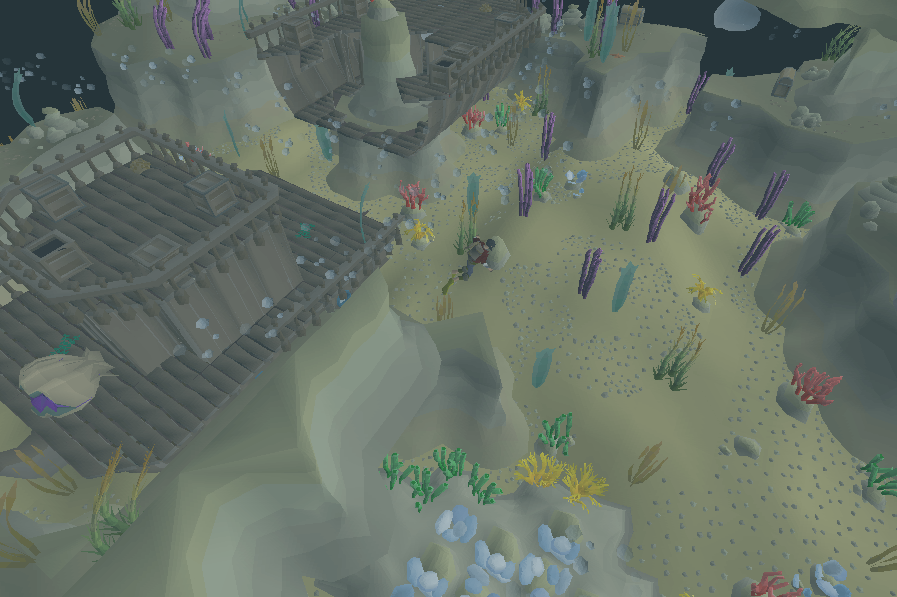
Ammonite crabs have long been a go-to for players who want to train melee while doing something else. They are commonly found on Fossil Island, have high Hitpoints and low Defence, and become aggressive for about ten minutes after you attack them. That aggression timer lets you stand in one spot, let auto-retaliate do the work, and only reset the aggro every ten minutes. They drop fossils and some other minor items, but no valuable uniques and no pet. Because you are not actively prayer switching or dodging, the XP per hour is much lower than an active Scurrius with bone weapons, but the attention requirement is close to zero.
Fossil Island access requires completion of the Bone Voyage quest, and the best spots can be crowded. The wiki lists ammonite crabs as a viable AFK method for low-to-mid melee stats, but you should verify current locations and rates, as they can shift with updates. If pure AFK is your priority and you do not mind slower progress, ammonite crabs are a fine choice — but they will not teach you boss mechanics, earn profit, or give a pet roll.
Direct Comparison: Scurrius vs Ammonite Crabs
The table below summarises the key differences. XP rates are not exact because they scale heavily with gear, prayer, and attention; treat the numbers as relative rather than absolute and check the wiki for your specific setup.
| Method | Attention | Relative XP/hr | Profit per hour | Pet chance | Mechanics learned |
|---|---|---|---|---|---|
| Scurrius (bone weapon) | High — active prayer switches, dodging, minion clears | High — competitive with NMZ and sand crabs, boosted by multiplier | ~194k gp/hr from kills (based on wiki money making guide) | 1/3,000 per kill (Scurry) | Prayer switching, movement, minion management |
| Ammonite Crabs | Very low — reset aggro every 10 mins, otherwise AFK | Moderate — lower than active Scurrius, but zero-effort | Very low — fossils and minor drops only | None | None — pure AFK combat |
The money making guide for Scurrius estimates around 194,042 gp per hour at the recommended levels, which is not life-changing but covers your supplies and adds up over a long training grind. Ammonite crabs, by comparison, produce only incidental fossils and common drops that are barely worth picking up. If you value your time and prefer to be engaged, Scurrius is the clear winner; if you need to study or watch videos, crabs have a place.
Drops, Profit, and the Rat Pet
Scurrius drops a modest but useful assortment of items. A solo or MVP kill averages around 9,527 gp in loot, with common drops including adamant and rune armour, runes (chaos, death, law), food, and coins. The medium clue scroll rate is 1/25 (increasing to 1/23 with the medium Combat Achievements reward), and the spine used for bone weapons is 1/33. Non-MVP players in group kills see a much lower average of 1,965 gp per kill, because they only roll the secondary table. The boss's pet, Scurry, is a 1/3,000 drop — a rare but tangible reward that gives the grind a long-term goal beyond XP.


If you are training for profit as well as XP, Scurrius beats ammonite crabs hands down. The spine is the key upgrade: not only does it unlock the bone weapon multiplier, but extra spines can be sold or used to upgrade multiple weapons. Medium clues from Scurrius are a nice bonus for accounts that enjoy clue scrolls, and the occasional rune armour drop can be alched or sold to fund supplies. Over a multi-hour session, the profit covers your prayer potions and food, and the pet chance adds excitement that AFK crabs can never match.
Common Mistakes and How to Avoid Them
- Not using a rat bone weapon once you have a spine. The weapon is the entire reason Scurrius is competitive XP. Without it, you are just killing a boss with normal XP — crabs would be more AFK for similar or better rates.
- Forgetting to switch prayers. Scurrius will shred you if you camp Protect from Melee. Watch the boss's animations and switch quickly; the Combat Achievement 'Perfect Scurrius' is a good training benchmark.
- Ignoring the falling bricks and tail swipe. These are avoidable damage that wastes food. Move out of the way or step back when you see the telegraph.
- Doing public group kills without a plan. Non-MVP loot is much worse; if you are training in a group, rotate MVPs or use a shared instance if you are Group Ironman.
- Not bringing potions. Super attack and strength potions dramatically speed up kills, which directly increases XP per hour. The profit from drops easily covers the cost.
- Staying too long without banking. Scurrius drops food frequently but it is inconsistent. Bring enough supplies for several kills, then bank at Varrock and return.
When Buying Gold or a Boost Is the Honest Shortcut
Both methods have a gear floor that makes the early kills or AFK sessions much smoother. If you are starting at base 50 melee stats, upgrading from rune to dragon weapons, an amulet of glory, a combat bracelet, and decent prayer gear can cut hours off your grind. Those upgrades cost more than a low-level account typically has, and that is where buying OSRS gold becomes an honest time-saver: you exchange real-world money for the in-game currency to buy the gear that lets you train effectively. It does not break the rules if you use a reputable marketplace, and it keeps the game fun instead of turning every early level into a money-making chore.
Alternatively, a training boost can take your account from 50 to 80 Attack/Strength/Defence while you sleep, but that removes the boss practice entirely. For players who want the pet or the Combat Achievements, paying for levels alone is often a poor trade. The better shortcut is to buy gold for gear and supplies, then actively train at Scurrius yourself — you get the XP, the mechanics practice, and a genuine shot at Scurry. Whatever you choose, compare rates on the live gold market before you commit.
Sources
Frequently asked questions
Is Scurrius better XP than ammonite crabs?
Yes, once you have a rat bone weapon, Scurrius offers significantly higher melee XP per hour than ammonite crabs. Active prayer switching and faster kills push rates into the 60k–80k range, while AFK crabs typically fall around 30k–45k. Scurrius also adds profit, pet chance, and real boss practice.
What combat level should I start Scurrius?
The boss is designed for combat levels 60–90, but you can start earlier with 50+ melee stats and 43 Prayer. Gear quality matters more than absolute level; with rune armour and a dragon scimitar you can get kills, then upgrade to a bone weapon after your first spine.
How do rat bone weapons work at Scurrius?
Scurrius drops a spine at a 1/33 rate. Players can combine the spine with certain metal weapons to create rat bone versions that multiply the combat XP earned from hitting Scurrius. Exact combinations and multipliers change, so check the OSRS Wiki before crafting one.
Does Scurrius drop a pet?
Yes, Scurrius can drop the Scurry pet at a 1/3,000 chance per kill. The pet is rolled on the MVP/solo drop table, so solo players have the full chance. Group non-MVPs do not roll for the pet, making solo or instance play better for pet hunters.
Can I do Scurrius in a group?
Absolutely. The public room allows multiple players to fight a stronger Scurrius with more Hitpoints. Group kills give XP based on damage dealt, but only the MVP gets the main drop table. Group Ironmen have a shared instance, while regular ironmen only receive medium clues from MVP.
How much profit is Scurrius per hour?
The OSRS Wiki money making guide lists around 194,042 gp per hour killing Scurrius at recommended levels. Actual profit varies with kill speed, supply costs, and luck. Rune armour, runes, and medium clue scrolls are the main sources of income, plus the spine for bone weapons.
Do I need prayer for Scurrius?
43 Prayer for Protect from Melee is strongly recommended, and you will also need to switch to Protect from Missiles and Protect from Magic during the fight. Bring prayer potions to sustain overheads. Without prayer, you will burn through food far faster and may struggle to complete kills efficiently.
Marketplace
Get live rates, instant quotes, and hand-traded delivery on Trillionaire Services.
Related listings
 Leveling
Varlamore Wealthy Citizens vs Ardougne Knights: Thieving 50–99 on Mains and Irons
Compare Varlamore wealthy citizens and Ardougne knights for Thieving 50–99. See XP rates, profit, fail rates, diary boosts, and when buying gold or a boost is the smart shortcut.
 Leveling
OSRS Defence 70-99: Void vs Obsidian NMZ Guide
Compare Pest Control Void armour progression with AFK obsidian training at Nightmare Zone for 70-99 Defence. XP rates, gear unlocks, attention required, and time-to-goal.
 Leveling
OSRS Magic 77-99: Tan Leather vs Superglass Make – Profit per Cast & Market Margins
Compare Tan Leather on dragonhide vs Superglass Make for Magic training 77–99, including XP per cast, profit formulas, market margins, and when buying gold is the honest shortcut.