
 Leveling
Guides
OSRS Ironman Crafting: Glassblowing Orbs vs Battlestaves
A deep training guide comparing molten glass orb blowing and battlestaff crafting for ironmen, including resource gathering, XP rates, and profit from alching.
Game screenshots and facts are cited from the Old School RuneScape Wiki (strategy, equipment, drops, and related pages). Writing is original editorial, not a copy of the wiki article.
Every iron account hits the same Crafting wall. Teleport jewellery, amulets of glory, zenyte jewellery, and even some quests sit behind a skill that can feel like a second job. The two most common ways to push past the mid-game are blowing molten glass into orbs and crafting battlestaves. They use the same base resource but split into very different playstyles: one is a low-requirements AFK-ish rhythm of sand and seaweed, the other is a higher-investment production line that ends in high alchemy profit.
This guide compares glassblowing orbs with battlestaff crafting for ironmen, walking through the unlock levels, supply chains, realistic time-to-goal, and the moments where paying for a service or buying gold on a main account becomes an honest shortcut rather than a badge of shame.

Who this is for and what you need
This guide is written for ironmen who need Crafting for hard diary steps, glories, or 75+ for jewellery, but mains can use the same methods to turn supplies into profit. Ironman mode changes everything: you cannot buy buckets of sand, seaweed, or battlestaves from the Grand Exchange, so every resource must be gathered or produced yourself. That makes the choice between glassblowing and battlestaves less about gold and more about how much tedium you are willing to accept.

The core requirements for the methods covered are steep but not unusual for an iron account. You will want at least 35 Crafting after quests, a glassblowing pipe, and a source of molten glass. If you plan to use Superglass Make, that adds Lunar Diplomacy and a high Magic level, plus access to giant seaweed patches and a sand mining spot. Battlestaves require 54 Crafting for water battlestaves and scale up from there. The Dorgesh-Kaan lamp method, which is the most efficient use of molten glass after 87, asks for 44 Thieving, 52 Firemaking, and completion of The Lost Tribe.
Early levels: quests and cheap craftables
Before you blow a single orb, you can skip most of the early Crafting grind with quests. A full round of early quest rewards totals 23,856 Crafting experience, enough to take a fresh account straight to level 35. That unlocks glassblowing without ever needing to spin flax or craft leather.
Some of the most efficient quests include:
- Sheep Shearer – 150 Crafting XP
- Goblin Diplomacy – 200 Crafting XP
- Misthalin Mystery – 600 Crafting XP
- Dwarf Cannon – 750 Crafting XP
- Murder Mystery – 1,406 Crafting XP (unlocks flax spinning)
- Observatory Quest – 2,250 Crafting XP
- Death on the Isle – 5,000 Crafting XP (requires 34 Crafting and 32 Agility? — verify on wiki)
- Elemental Workshop I & II – 5,000 and 7,500 Crafting XP respectively, with Smithing XP as a bonus
Early alternative methods include collecting flax south of Seers' Village and spinning bowstrings at level 10, blowing molten glass on Entrana using local seaweed and sand, and running birdhouses for passive XP. Guardians of the Rift also gives 5,000–6,000 Crafting XP per hour at no cost, which is worth doing if you are already training Runecraft.
.png?a4903)
Glassblowing from 35: sand, soda ash, and charter ships
Once you hit 35 Crafting, the classic ironman loop begins: collect buckets of sand, collect soda ash from seaweed, cook the seaweed into soda ash, then use a glassblowing pipe on the two ingredients to make molten glass. From there you can blow the molten glass into unpowered orbs, light orbs, or other useful glass items. The most common early product is unpowered orbs, because they stack, sell well on a main, and can later be charged into battlestaff orbs.
The bottleneck is raw material. For ironmen, the two main sources are:
- Charter ships: Buy buckets of sand and soda ash (or seaweed) from charter crew members at ports like Catherby, Port Khazard, and Brimhaven. Stock is per-player and restocks over time, so you can hop worlds to buy more.
- Self-gathering: Mine sandstone in the desert and grind it into buckets of sand, or farm giant seaweed underwater for soda ash after cooking. This is slower per hour but gives you full control and no world-hopping.
Early glassblowing XP is modest but AFK-friendly. You can blow a full inventory of molten glass while doing other tasks, then bank and repeat. The method really comes alive after 61, when Superglass Make removes the soda ash cooking step entirely.
Superglass Make: turning giant seaweed and sand into molten glass
At 61 Crafting and with the Lunar spellbook unlocked, Superglass Make becomes the backbone of ironman Crafting. The spell converts a full inventory of buckets of sand and either seaweed or giant seaweed into multiple molten glass, with a chance to produce extra glass and return some buckets. Giant seaweed is heavily preferred because each piece counts as multiple seaweed, dramatically increasing the yield per inventory.
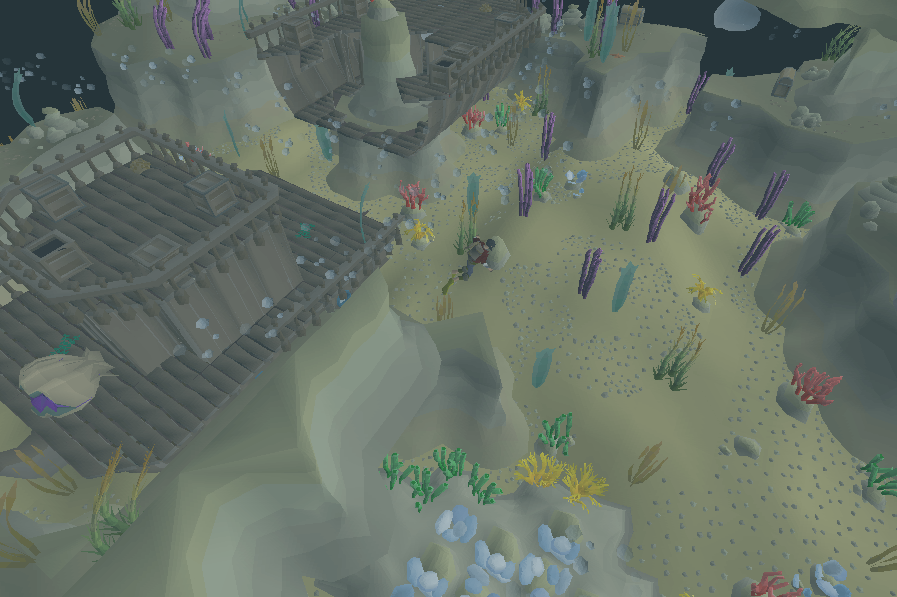
The supply chain becomes a pair of recurring loops: farm giant seaweed underwater at the seaweed patches near the Fishing Trawler or Fossil Island, and mine sandstone in the desert, grind it into buckets of sand, then bank both. A single run of giant seaweed can sustain many casts, but you will need thousands of buckets of sand for a serious push to 87 or beyond.
One of the biggest upgrades is the Superglass Make spell's ability to process 13 giant seaweed and 13 buckets of sand into 18–36 molten glass per cast, depending on your Magic level and chance. The exact yield ranges are documented on the wiki, but even the low end is a massive improvement over cooking soda ash one inventory at a time.
Battlestaves: the alch-profit payoff
Battlestaves are the natural upgrade for glassblowing because they reuse the same orbs you have been making. Instead of banking unpowered orbs, you charge them at the appropriate Obelisk using runes or spellbooks, then attach the charged orb to a battlestaff. The resulting staff can be high alched for a profit that covers the cost of the battlestaff and often leaves a margin.
The progression starts at 54 Crafting with water battlestaves, then earth, fire, and air as your level climbs. Each step requires the relevant charged orb and a battlestaff of that element. Exact XP per staff and alch values change with the economy, so you should check current prices on the wiki or a price tracker before committing to a large batch.
For ironmen, battlestaves are doubly valuable: they convert otherwise useless orb stock into coins, and they provide a higher XP-per-orb rate than unpowered orbs because the final assembly step adds Crafting XP. That extra XP per molten glass is why many ironmen hold off on mass orb blowing until they can make battlestaves.
The big trade-off is resource time. Charged orbs require cosmic runes and an obelisk trip for each element, which adds travel time and rune costs. Battlestaves themselves come from Zaff's staff shop in Varrock after completing What Lies Below, or from other limited sources. A main account can simply buy both from the Grand Exchange; an ironman must gather everything.
Dorgesh-Kaan lamps: the 87+ efficiency ceiling
Once you reach 87 Crafting, the Dorgesh-Kaan lamp repair method turns molten glass into the best Crafting XP per glass in the game. The loop is simple: take an inventory of molten glass and a glassblowing pipe, run from the bank to the wire machine in Dorgesh-Kaan, blow empty light orbs on the way, thieve cave goblin wire from the machine, attach wire to orbs to make completed light orbs, then run around the city fixing broken lamps.
The numbers are impressive. Making an empty light orb gives 70 Crafting XP, adding the wire grants another 104 XP, and fixing a lamp rewards 500 Crafting and 500 Firemaking XP. Every 50 lamps fixed gives a bonus 2,500 XP in both skills. Skilled players can hit 130,000 Crafting XP per hour, 90,000 Firemaking XP, and 4,000 Thieving XP, while learners should expect closer to 90,000 Crafting XP per hour.
The method is not AFK. You are constantly running, blowing orbs, thieving wire, and hunting for broken lamps. Bring graceful, stamina potions, and a Dorgesh-kaan sphere if you have one. The lamps are unique to you, so about ten will be broken at any time, and the game gives a minimap arrow when another broken lamp is nearby.
This is the method that makes 87-99 Crafting bearable. It also gives massive Firemaking XP, which helps ironmen who ignore wintertodt. The only downside is the high requirement wall: 87 Crafting means you have already done hundreds of hours of lower-level training.
Method comparison: AFK vs efficient vs profit
| Method | Level range | Attention | Approx. XP/hr | Profit/Notes |
|---|---|---|---|---|
| Quest rush | 1-35 | Active, one-time | 23,856 total XP | No profit, skips early grind |
| Charter ship glassblowing | 35-61 | Low attention, bankstand | Modest (verify wiki) | Unpowered orbs sell or save for later |
| Superglass Make + orb blowing | 61-87 | Active gathering, AFK blowing | Higher than charter, but not peak | Uses giant seaweed and sand; requires Magic |
| Battlestaves | 54-99 | Active, multi-step | Good XP per orb plus alch profit | Profit margin depends on GE/alch values |
| Dorgesh-Kaan lamps | 87-99 | Very active, constant running | 90k-130k Crafting XP/hr | Also 65k-90k Firemaking XP/hr |
For ironmen, the best route is often a hybrid: quest to 35, charter glassblow to 61, Superglass Make with giant seaweed to 87, then switch to Dorgesh-Kaan lamps while saving any leftover molten glass for battlestaff orbs when you need cash. This balances AFK time with efficient XP and keeps a steady supply of alchable items.
Time and cost tradeoffs: when buying gold or a boost makes sense
The honest truth about ironman Crafting is that it is a supply chain problem. The XP actions themselves are fast; gathering thousands of buckets of sand and seaweed is what eats your playtime. A main account can skip the gathering entirely by buying supplies with gold. An ironman cannot buy gold or supplies, so the only shortcut is paying for a service to run the boring parts while you handle other goals.
If you are a main account interested in battlestaff profit, buying gold to purchase bulk molten glass, battlestaves, orbs, and nature runes can be a legitimate time-save. You still earn the Crafting XP yourself, but you avoid the GE waiting and price fluctuation risk. From an efficiency standpoint, if you value your time at more than the gold cost of supplies, buying gold is a rational decision.
For ironmen, the calculus is different. You cannot trade, but you can hire a boosting service to play your account for the resource gathering or even the lamp-fixing grind. This is against some interpretations of Jagex rules, so check the current terms before going that route. Many ironmen instead choose to do the method themselves because the self-sufficiency is the point of the mode.
Regardless of account type, the time-to-goal from 35 to 99 is substantial. At 35 Charter glassblowing might earn 30k-40k XP per hour, Superglass Make with blowing maybe 60k-80k depending on attention, and Dorgesh-Kaan lamps peak at 130k. The total XP from 35 to 99 is around 13 million, so you are looking at 200+ hours of combined gathering and crafting for a fully self-sufficient iron. That number drops dramatically if you focus only on high-attention methods after 87.
If your goal is just 70 Crafting for a glory, the grind is much shorter: from 35 to 70 is only about 700k XP, achievable in a few long sessions of charter glassblowing or Superglass Make with pre-gathered supplies. If you want 87 for lamps or 93 for zenyte jewellery, budget accordingly.
View live gold rates if you are a main who wants to fund the grind and skip GE tedium.
Common mistakes to avoid
- Cooking soda ash manually after 61. Once you have Superglass Make, never cook seaweed into soda ash again. Use the spell on raw seaweed and sand; it produces more molten glass per resource.
- Ignoring giant seaweed. Regular seaweed is a trap for Superglass Make. Farm giant seaweed underwater; each piece counts as six seaweed, which multiplies your yield per inventory.
- Blowing unpowered orbs without a plan. Unpowered orbs stack, but if you never charge them into battlestaves, they sit in your bank doing nothing. Keep a stock for battlestaff assembly.
- Starting battlestaves before 54. You cannot attach charged orbs to battlestaves before level 54. Blow unpowered orbs until then, and save the orbs for later.
- Using Dorgesh-Kaan lamps while learning with a full bank. The method is terrible if you constantly bank. Bring a large stack of molten glass, note the lamp locations, and use a Dorgesh-kaan sphere for teleports.
- Alching battlestaves without checking margins. Nature rune prices and staff costs shift. Do a small test batch before high alching thousands.
Sources and further reading
- Ironman Guide/Crafting on the OSRS Wiki – primary method details, quest lists, Superglass Make, Dorgesh-Kaan lamps.
- Pay-to-play Crafting training on the OSRS Wiki – general training methods, battlestave section, early leather/gem options.
Frequently asked questions
Is glassblowing orbs better than battlestaves for ironman Crafting XP?
Glassblowing unpowered orbs is simpler and lower requirement, but battlestaves give extra XP per orb when you attach and alch them. Battlestaves also convert orbs into coins, making them better overall if you have 54+ Crafting and access to battlestaves. Early on, focus on glassblowing until you can make battlestaves profitably.
What are the requirements for Superglass Make?
Superglass Make is a Lunar spell requiring Lunar Diplomacy and level 77 Magic. You also need buckets of sand and seaweed or giant seaweed in your inventory. The spell converts them directly into molten glass, skipping the soda ash cooking step and producing extra glass per cast.
How do I get giant seaweed and sand for Crafting?
Giant seaweed is farmed underwater at seaweed patches, primarily on Fossil Island and near the Fishing Trawler. Sand comes from mining sandstone in the desert and grinding it at a grinder, or by buying buckets of sand from charter ships. Ironmen should set up a cycle: farm seaweed runs, then mine sand for long sessions.
At what level should I switch to battlestaves instead of unpowered orbs?
Switch at 54 Crafting when you can make water battlestaves. Before that, unpowered orbs are fine. Battlestaves require charged orbs (water, earth, fire, air) and a battlestaff of the matching element. They provide higher XP per orb and high alch profit, so saving orb stock for battlestaves is smart.
Can I make money from Crafting battlestaves as an ironman?
Yes, high alching battlestaves typically returns more coins than the battlestaff and nature rune cost, leaving a profit. The margin depends on current prices. Ironmen gather battlestaves from Zaff's shop after What Lies Below, so the profit is time-sunk but eventually coins in your pouch.
What is the Dorgesh-Kaan lamp method and is it worth it?
Dorgesh-Kaan lamp repair turns molten glass into light orbs, then you fix broken lamps for big Crafting and Firemaking XP. It requires 87 Crafting, 44 Thieving, 52 Firemaking, and The Lost Tribe. At 90k-130k Crafting XP per hour, it is the best use of molten glass after 87 and well worth the grind.
Do I need 87 Crafting before using molten glass for lamps?
Yes, the Dorgesh-Kaan lamp repair method requires 87 Crafting to make empty light orbs from molten glass. Before that, molten glass is better used for unpowered orbs or battlestaff orbs. You can still collect molten glass before 87, but wait to spend it on lamps.
Marketplace
Get live rates, instant quotes, and hand-traded delivery on Trillionaire Services.
Related listings
 Leveling
Varlamore Wealthy Citizens vs Ardougne Knights: Thieving 50–99 on Mains and Irons
Compare Varlamore wealthy citizens and Ardougne knights for Thieving 50–99. See XP rates, profit, fail rates, diary boosts, and when buying gold or a boost is the smart shortcut.
 Leveling
OSRS Defence 70-99: Void vs Obsidian NMZ Guide
Compare Pest Control Void armour progression with AFK obsidian training at Nightmare Zone for 70-99 Defence. XP rates, gear unlocks, attention required, and time-to-goal.
 Leveling
OSRS Magic 77-99: Tan Leather vs Superglass Make – Profit per Cast & Market Margins
Compare Tan Leather on dragonhide vs Superglass Make for Magic training 77–99, including XP per cast, profit formulas, market margins, and when buying gold is the honest shortcut.