
 Leveling
Guides
OSRS Ironman Melee: Slayer vs Crabs Training Guide
Quests, crabs, Slayer, and NMZ compared for ironman melee. Learn when gemstone crabs beat Slayer, what unlocks matter, and whether a pre-trained account saves time.
Game screenshots and facts are cited from the Old School RuneScape Wiki (strategy, equipment, drops, and related pages). Writing is original editorial, not a copy of the wiki article.
Melee is the spine of most ironman accounts, but the path to 70 Attack, Strength, and Defence splits into two philosophies: sit at crabs for zero-resource combat XP, or embrace Slayer early and accept slower melee gains in exchange for unlocks and supplies. This guide compares both routes hour by hour, from early quest skips through Nightmare Zone.
We will cover the three crab hotspots, Slayer-first logic, weapon upgrades, common mistakes, and the real time-to-goal tradeoff. At the end, if you value your hours more than the grind, we will point out where a pre-trained account or service honestly fits.

Why This Comparison Matters for Ironmen
On a normal account, you can buy a whip, buy food, and pay for cannonballs. On ironman, every melee level comes from your own grind, and the method you choose feeds into Slayer XP, quest unlocks, and gear progression. Training exclusively at crabs gets you to 70 Attack, Strength, and Defence faster in terms of pure combat XP, but it generates zero Slayer XP and zero banked supplies. Slayer-first melee is slower raw XP, but it builds the account: you will unlock whip, dragon boots, occult necklace, trident of the seas, and a stockpile of alchables, herbs, and seeds.
This guide weighs both routes against each other and against Nightmare Zone, which is the ultimate AFK fallback after base 70 melee. We also look at the early quest skip list, because starting from level 1 is a trap.
Early Melee Levels: Quests vs Crabs
Sitting at level 3 Attack and Strength is a waste. Multiple quests offer huge early XP and can be completed with safespotting or no combat at all. The rewards below can skip the first 20+ combat levels before you ever touch a crab.
- Waterfall Quest — no requirements, 13,750 Attack + 13,750 Strength
- Fight Arena — safespottable, 12,175 Attack
- Vampyre Slayer — 4,825 Attack (level 34 vampire)
- Tree Gnome Village — safespottable level 112, 11,450 Attack
- The Grand Tree — 25 Agility, safespottable level 172, 18,400 Attack
- Holy Grail — after Merlin's Crystal, 15,300 Defence
- Haunted Mine — after Priest in Peril, 22,000 Strength
- Dragon Slayer I — 32 Quest Points, 18,650 Strength + 18,650 Defence
For hardcore ironmen, train Hitpoints first with Witch's House and fire strike before attempting Waterfall or Grand Tree, because some fights can hit hard if you splash. Most quest bosses can be safespotted with fire strike, so bring an air staff and a few thousand mind runes.

Crab Grinding: Gemstone, Ammonite, and Sand Crabs
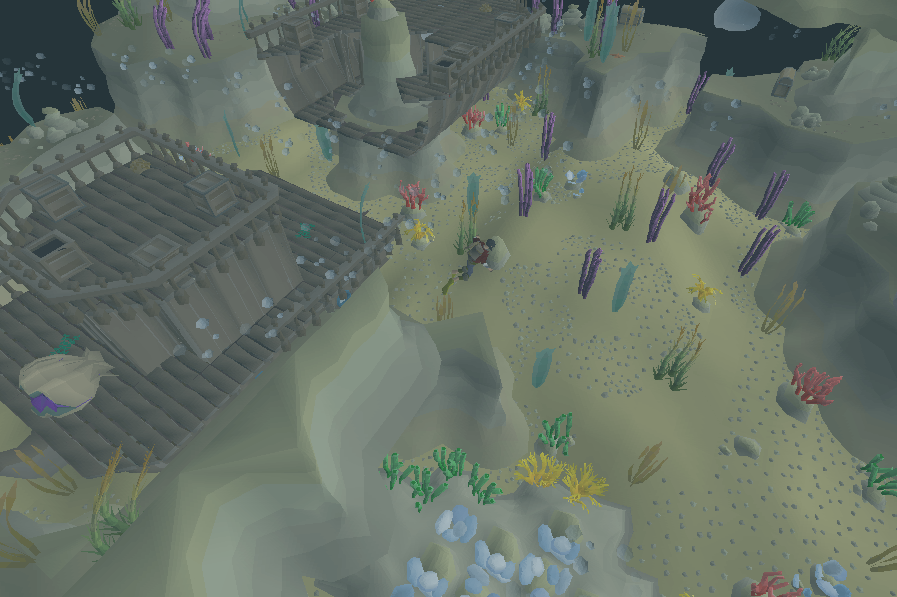
Crabs are the default low-attention melee training for ironmen because they barely fight back. The current best is the gemstone crab in Varlamore's Tlati Rainforest. You need only Children of the Sun to access the area. Gemstone crabs sit at one of three mines for exactly ten minutes, then relocate. You can follow them by entering any nearby cave, and up to 16 players can share each cycle. The catch is that you earn 87.5% of the usual melee XP per hit, but because there is no downtime and no overkill, the overall hourly rate is still higher than older crab spots.
Ammonite crabs on Fossil Island are a strong runner-up. They are aggressive for ten minutes, have high Hitpoints, drop numulite, and require little food. Sand crabs in Hosidius need no requirements but are often crowded and have lower HP, which means more downtime and overkill.
.png?45c37)
Slayer-First Melee: The Efficiency Argument
Once you have base 60 melee from quests and crabs, Slayer becomes the more account-efficient route. Ironman mode locks some of the most important gear behind Slayer: the abyssal whip at 85 Slayer, dragon boots, occult necklace, and trident of the seas. Training melee on Slayer tasks gives both melee and Slayer XP simultaneously, and tasks drop alchables, seeds, herbs, and rune items that fund your other skills.
The downside is that Slayer melee is less AFK and often lower raw melee XP per hour, especially early. But skipping Slayer until 90+ melee means you will still have to grind those same tasks later for gear, effectively wasting the combat XP. A balanced approach: use crabs to reach 60 Attack/Strength/Defence, then pivot to Slayer for most training from 60 to 85+.
Nightmare Zone and Other Melee Methods
At base 70 melee, Nightmare Zone offers the ultimate AFK melee training. Using a normal customizable rumble and absorption potions, you can stay in combat for up to 20 minutes without clicking. The downsides are the coin fee and no valuable drops. NMZ is perfect for when you need to study, work, or play another account, but it does not advance Slayer or produce resources.
Some guides also list sulphur naguas and barbarian fishing as alternative melee or Strength methods. Sulphur naguas are part of Varlamore's later combat; barbarian fishing gives small Strength XP alongside Fishing. These are niche, so verify the current rates on the wiki before dedicating hours.
Weapons and Special Attacks Unlocked Along the Way
Your weapon progression on an ironman is dictated by Slayer and quest progression. At 60 Attack, complete The Lost City for the dragon dagger, whose special attack is a cheap damage burst. After Shadow of the Storm, upgrade Darklight to Arclight using ancient shards from the Catacombs of Kourend. Arclight is the second strongest weapon against demons and its special drains stats, making it a staple for demon Slayer tasks and bossing.
Later milestones include the dragon warhammer, which requires hard Kourend & Kebos Diary and lizardman Slayer assignments to kill lizardman shamans efficiently. Godswords from God Wars Dungeon, dragon claws from Chambers of Xeric, and burning claws from Tormented Demons offer situational special attacks. The voidwaker's special is the most consistent late-game option because it skips accuracy checks.
For the 70-85 Strength grind, many players compare the abyssal whip and Saradomin sword. Read our detailed breakdown here.
Time-to-Goal and Attention Tradeoffs
The table below compares the main melee training methods for ironmen. Raw melee XP per hour can vary with gear, but the attention and resource columns are the real decision points.
| Method | Attention | Melee XP | Slayer XP | Drops/Resources | Key Requirement |
|---|---|---|---|---|---|
| Gemstone crabs | Low (10 min AFK cycles) | High (87.5% per hit, no downtime) | None | None | Children of the Sun |
| Ammonite crabs | Low (10 min aggression) | Moderate (overkill/downtime) | None | Numulite | Fossil Island access |
| Sand crabs | Low-medium (crowded) | Lowest | None | None | None |
| Slayer tasks | Medium-high (depends on task) | Moderate (slower at start) | Yes | Alchables, seeds, uniques | Varies by task |
| Nightmare Zone | Very low (20 min AFK) | Moderate at 70+ | None | No valuable drops | Base 70 melee, coin fee |
The fastest route to base 70 is quests + gemstone crabs. The most efficient long-term route is quests + a short crab stint to 60, then Slayer. If you need to AFK during work, NMZ replaces crabs after 70.
Common Mistakes and How to Avoid Them
- Training from level 1 without doing the XP quests.
- Staying at sand crabs on a crowded world when gemstone crabs are free.
- Skipping Slayer until 90+ melee and then grinding for a whip from scratch.
- Using a rune scimitar instead of unlocking dragon dagger/Arclight.
- Hardcore ironmen attempting Waterfall Quest with 10 Hitpoints.
- Forgetting to use Arclight's special on demon tasks.
- Picking a method based on old guides without checking current wiki rates.
When Buying Gold or a Service Is the Honest Shortcut
Ironman mode intentionally removes trading, so gold has almost no use for training supplies on an ironman. That said, the real currency in this comparison is time. If you have a job, family, or limited play hours, spending 25–40 hours repeating the same crab cycle or Slayer task may not be realistic. A pre-trained ironman account or a trusted training service can skip the repetitive middle portion and let you start at the fun bossing stage. We do not encourage rule-breaking, and account sharing violates Jagex terms, so always weigh the risk and use only reputable providers if you go that route.
For normal accounts, gold can fund supplies, gear, and cannonballs that speed up melee and Slayer training significantly. If you are on a main, check live rates below.
Practical Next Step: Your First 40 Hours
- Hour 0–2: Complete Waterfall Quest, Witch's House, Fight Arena, Vampyre Slayer, Tree Gnome Village, The Grand Tree if you have 25 Agility.
- Hour 2–4: Finish The Lost City for dragon dagger and start Children of the Sun for Varlamore access.
- Hour 4–20: Camp gemstone crabs until 60 Attack, Strength, and Defence. Use your best scimitar or sword.
- Hour 20–30: Begin Slayer. Do Shadow of the Storm for Arclight and start collecting ancient shards.
- Hour 30–40+: Continue Slayer to 70+ melee, unlock dragon scimitar if you haven't, and mix in Nightmare Zone when you need AFK.
Sources
Frequently asked questions
Is Slayer or sand crabs better for OSRS ironman melee training?
For pure melee XP, gemstone or ammonite crabs are faster and more AFK. For account progression, Slayer is better because it unlocks whip, dragon boots, occult, and trident while banking supplies. Most efficient ironmen use crabs until base 60, then train melee through Slayer.
What quests should I do to skip early melee levels on an ironman?
Waterfall Quest gives 13,750 Attack and Strength with no requirements. Fight Arena, Vampyre Slayer, Tree Gnome Village, and The Grand Tree each grant 4,825 to 18,400 Attack. Holy Grail gives 15,300 Defence and Haunted Mine gives 22,000 Strength. Safespot most with fire strike.
Where are gemstone crabs and how do they work?
Gemstone crabs are in the Tlati Rainforest in Varlamore, requiring Children of the Sun. They stay stationary for ten minutes then move to one of three mines. Follow through any nearby cave. You get 87.5% xp per hit but no downtime, making them the best early melee spot.
Can ironmen train melee in Nightmare Zone?
Yes. At base 70 melee, Nightmare Zone with customizable rumble and absorption potions offers 20-minute AFK combat. However, it costs a coin fee and drops nothing valuable. Use it as an AFK supplement after you've unlocked key Slayer gear, not as a primary training method.
Which Slayer unlocks are most important for ironman melee?
The abyssal whip at 85 Slayer is the biggest melee upgrade. Dragon boots, occult necklace, and trident of the seas are also locked behind Slayer. Arclight from ancient shards and dragon warhammer from lizardman shamans both require Slayer-related progression and improve bossing dramatically.
What is the most AFK melee training for ironmen at level 70+?
Nightmare Zone is the most AFK, allowing 20 minutes with no interaction at base 70 melee. Gemstone crabs are the AFK choice below 70, with 10-minute cycles. Ammonite crabs are also good on Fossil Island. Slayer is never fully AFK because tasks change.
Should I train attack, strength, or defence first on an ironman?
Train Attack to 60 for dragon weapons and 70 for whip. Then Strength for damage. Defence is lowest priority because most early bosses can be safespotted. Many ironmen follow 60 Attack -> 70 Strength -> 70 Defence, but do what fits your next Slayer task or quest.
Marketplace
Get live rates, instant quotes, and hand-traded delivery on Trillionaire Services.
Related listings
 Leveling
Varlamore Wealthy Citizens vs Ardougne Knights: Thieving 50–99 on Mains and Irons
Compare Varlamore wealthy citizens and Ardougne knights for Thieving 50–99. See XP rates, profit, fail rates, diary boosts, and when buying gold or a boost is the smart shortcut.
 Leveling
OSRS Defence 70-99: Void vs Obsidian NMZ Guide
Compare Pest Control Void armour progression with AFK obsidian training at Nightmare Zone for 70-99 Defence. XP rates, gear unlocks, attention required, and time-to-goal.
 Leveling
OSRS Magic 77-99: Tan Leather vs Superglass Make – Profit per Cast & Market Margins
Compare Tan Leather on dragonhide vs Superglass Make for Magic training 77–99, including XP per cast, profit formulas, market margins, and when buying gold is the honest shortcut.